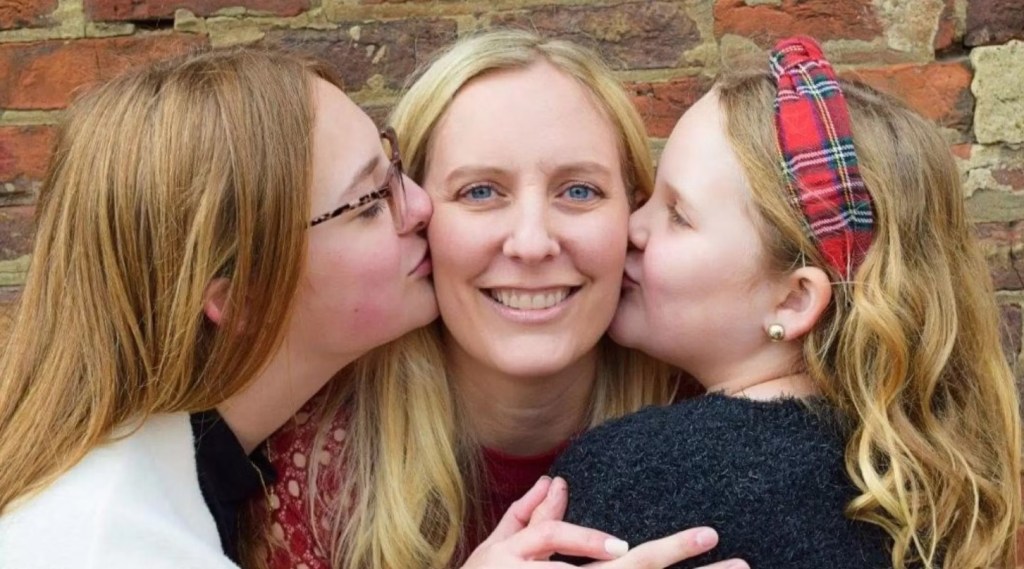
As an occupational therapist, Katie Adams had a keen sense of what was happening to her body when her ALS symptoms first started and was pretty sure she knew why. Little did she know her intuition would not only prove to be correct but would lead her to fighting for access to the care and equipment she needed just to live.
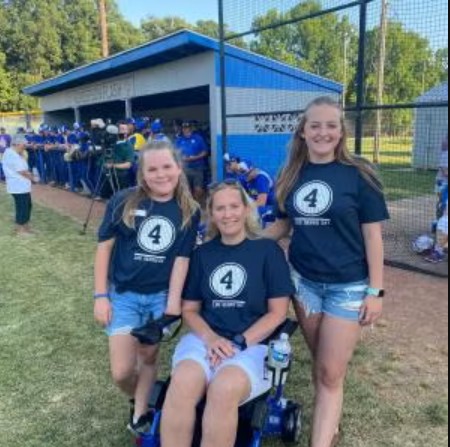
Katie is a 39-year-old mother of two young girls, ages nine and fourteen. Prior to her diagnosis, she worked as an occupational therapist and rehab manager, so she knew early on how her symptoms that started in July of 2021 correlated with ALS.
Logging and tracking her symptoms thoroughly, she set out on her journey to find the underlying cause of what was happening.
Like most people who are eventually diagnosed with ALS, she spent months visiting doctors and undergoing tests. Even with the extensive information she had collected about her symptoms, she continued to be dismissed from one doctor to the next.
One neurologist even suggested her symptoms were caused by anxiety. “I told her that anxiety does not cause muscle wasting,” recalls Katie. “I even asked her on multiple occasions if she thought this was ALS. She dismissed my concerns and ordered no other tests, simply stated my MRIs were all fine.”
“October 28th, 2022, was the day I was diagnosed. I honestly felt a huge sense of relief that day. I had already been processing the fact that I had ALS before my actual diagnosis date so this day I felt validated in my concerns with what my body was doing. I also felt like I had a sense of direction on what to do next.”
“I knew as soon as I was diagnosed that I wanted to do something to help others who had ALS and others who were going through the diagnosis process to help make things easier,” says Katie. “I wasn’t sure how I was going to help or what it would look like, but then it just landed in my lap.”

Katie’s difficulties didn’t end once she was diagnosed, they instead changed to other issues. She found out the hard way that because of a law in Kentucky, she did not have an option to purchase affordable Medigap insurance, the type of insurance needed to help cover the 20% Medicare does not cover. “Because of the law, I had only one option when it came to helping cover costs Medicare didn’t cover and that was a Medicare advantage plan from United Healthcare.”
“Being in healthcare myself, I already knew the disadvantages of these so-called ‘advantage plans.’ However, I knew I couldn’t cover the 20% out of my pocket so I had to go with this option,” she says. Just a few months after getting the insurance, the company denied her very first claim: preauthorization of her power wheelchair. “Even knowing the history of these Medicare advantage plans, I was still shocked because how could they deny someone with such a serious illness such a vital piece of medical equipment?”
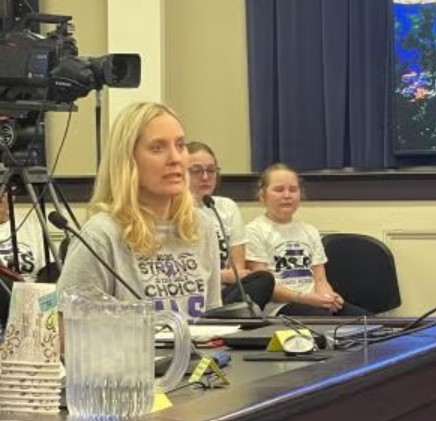
“Insurance companies and Medicare need to hear from our ALS community that we will not sit back and agree with their decision not to give us the medically necessary equipment to live our lives to the fullest.”
After connecting with her local ALS Association team about the issue, she was offered the opportunity to share her story with legislators to try to help get the law changed to fix this problem for all people living in Kentucky. “I was more than happy to jump on board. This is what I have been hoping for, a way to help.”
With the help and support of her family, she traveled to Frankfort, Kentucky and testified in front of Kentucky’s Health Senate Committee about her challenges, and why this law in Kentucky needed to be changed. “I simply told my story and the difficulties I had to face dealing with getting necessary equipment and basic needs met on top of having a fatal illness,” she recalls. “I was honestly very surprised at how impactful my testimony was. It’s amazing how having a fatal illness brings so much more volume to your voice.”
Katie is proud to share it was a unanimous “yes” vote on passing the new bill and it went on through the Senate and to the governor for signature. The law in Kentucky will take effect in January 2024! “I will be able to purchase affordable Medigap insurance then,” she says. “I felt such an overwhelming sense of accomplishment and happiness, knowing that this will help people in the future, not just with ALS, but with other serious illnesses too.”
Having a fatal illness such as ALS gives us such a platform to use our voice, and I feel the more people that use their voices the more attention we will bring to ALS, and the closer we will be to finding treatments and one day a cure.”
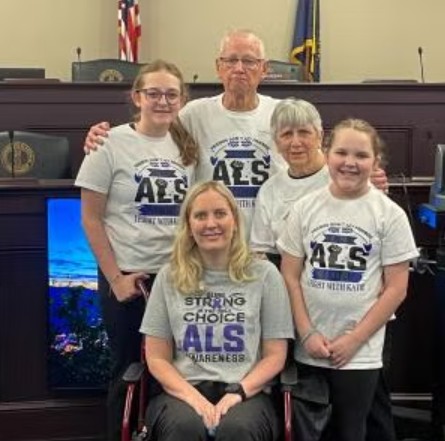
While the fight to get her power wheelchair is still not over, progress is being made. ”Thanks to the kindness of the wheelchair company, I now have my power wheelchair in my possession. After my testimony in Frankfort, they watched the video and decided they were going to bring me my chair and work out the funding later.”
“Have you ever heard the term ‘the squeaky wheel gets the grease?’ The ALS community needs to be a squeaky wheel and in order to do that we need more advocates: people living with ALS and people whose lives are affected by ALS,” she says.
 Julie Niehoff