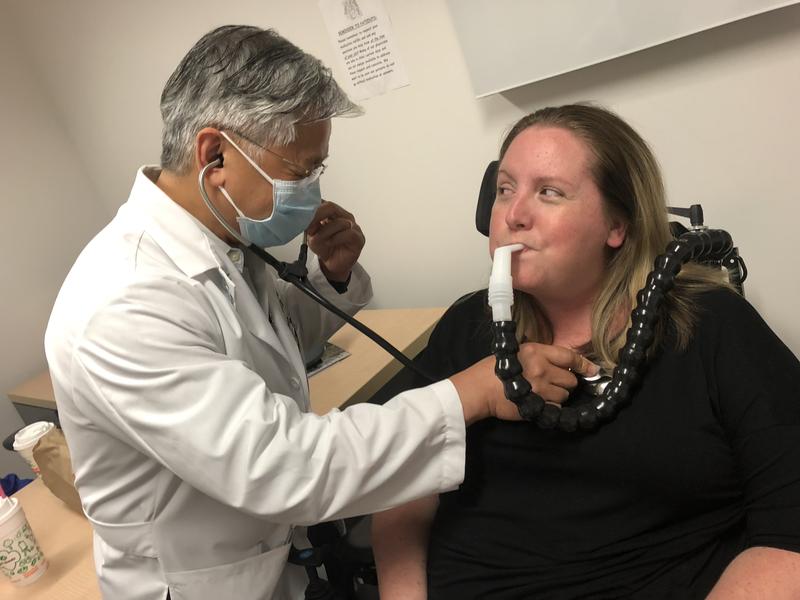
“They take the time to get to know you and your family, and then they really help by talking about things to come and helping us to be proactive with our symptoms.”
I started going to clinic a few months after I was diagnosed. In the beginning clinic was very fast. I didn’t have any issues besides my arms so there wasn’t much to talk about.
I still did all the things they told me to do and I’m glad I did because where I am now is completely different from a few years ago. I said, “That can’t be me, I can’t even see myself looking like that later on down the road. I’m not gonna be like that, no way.” And that was a couple years ago, but now I look back and say, “Oh my gosh!”
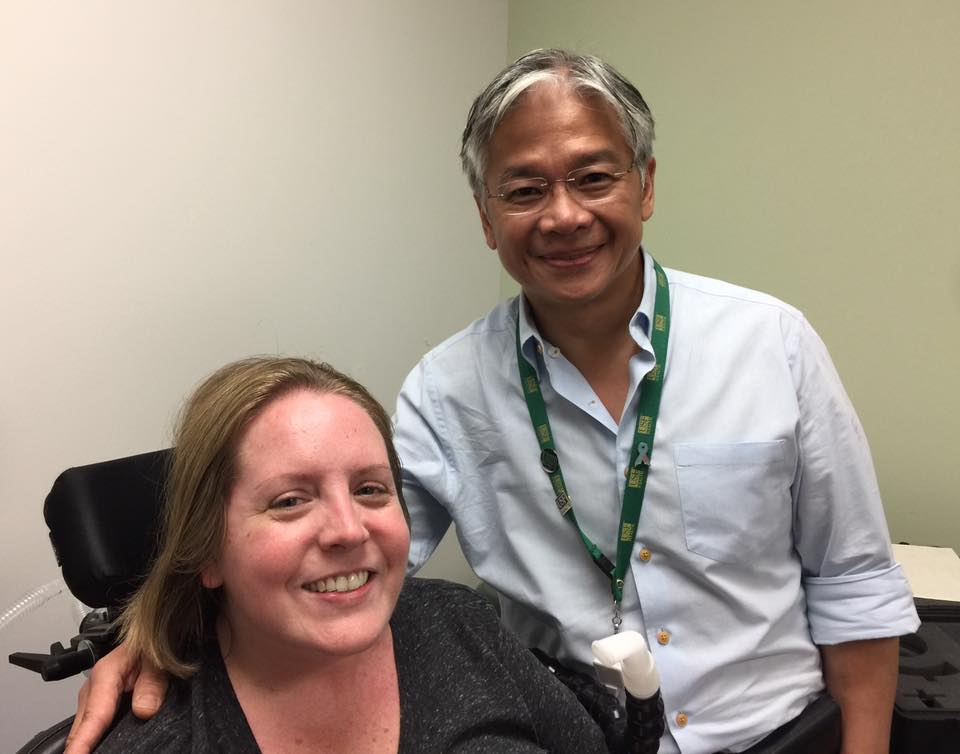
At the USF clinic, you see the doctor, clinicians, dietitians, physical therapists, and occupational therapists, even if you don’t need them yet.
What I like about going there is that even though I didn’t have a lot for them in the beginning, they always had a lot for me. They take the time to get to know you and then they help by making suggestions and telling you about things you can do to help and be proactive.
For example, the speech pathologist recommended making videos for my daughter while I can still talk so I made some for her important milestones like for her wedding day, prom and graduation, not a big video but enough to show her I was there and I cared and I cared if I’m there or not.
They also talked about ways to prolong my speech. There’s this little device you can clip on, it’s almost like a microphone, and it helps amplify your voice, so I got it. I can use it when I’m out and around a lot of people and it helps the people around you hear you better, so I don’t have to use so much breath and work so hard to get the sounds out. It helps a lot; I don’t get as tired and I can save my breathing.
Another example is the dietitian said I should start thinking about getting a feeding tube while my breathing is still good. So, I had a feeding tube put in last year and my husband puts things in the tube sometimes and helps me not be so fatigued, especially if I’m too tired to eat.
It’s a way of getting nutrients in when I just don’t feel like eating or have a taste for anything. They won’t put a feeding tube in if your vital capacity is less than 10% and now, I am at 8%. If I had waited, they wouldn’t have put a feeding tube in because they couldn’t have put me out, so I’m glad now that I did it last year when they recommended it.
Even though it was a real quick visit in the beginning, everyone always sat with you for 15 or 20 minutes and made sure your questions were answered and said, “Here are some suggestions and what other patients have recommended.”
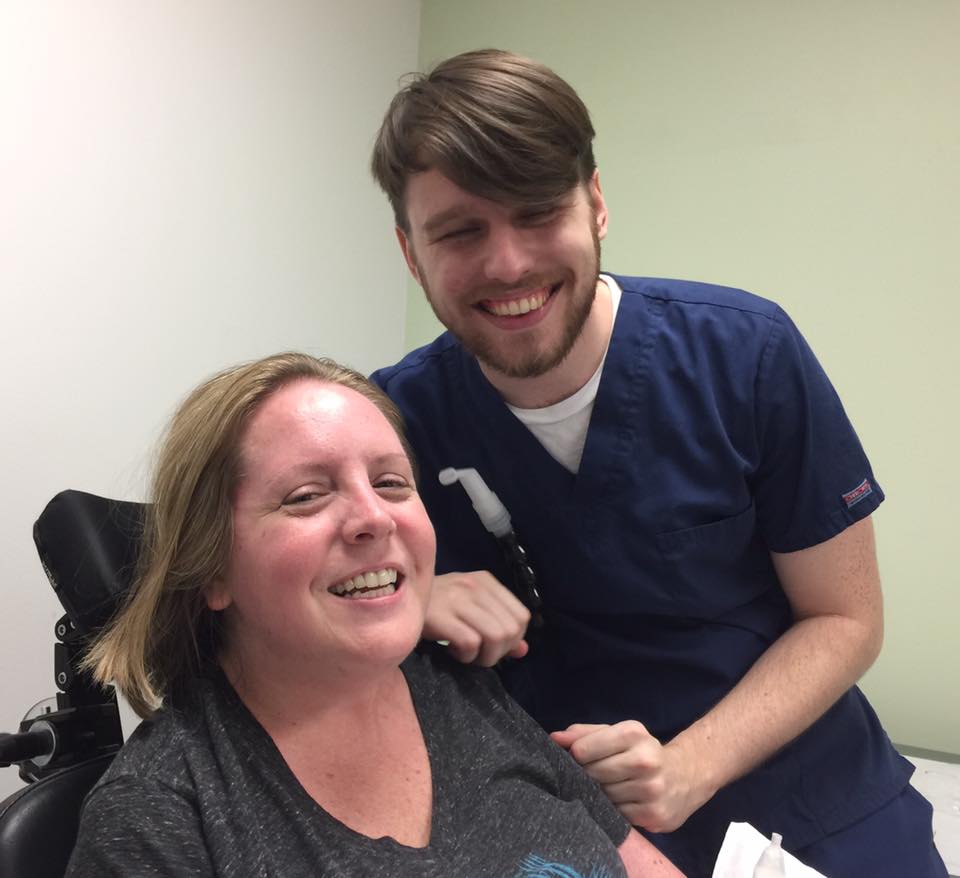
And you get to see the same people every time, so you build a rapport with them and you’re not seeing strangers. The whole team meets and talks through each patient at the end of the appointment and there’s a folder they keep of what is happening with us. And we get a printout at the end with all of the recommendations from everyone on the team.
We’re there for about four and a half hours. It’s a long day but I’d rather do that than make multiple appointments. I go every three months now since the funding has been cut. It used to be every two months. Now it’s every three or four months, which isn’t good because a lot can happen to me in four months.
 Julie Niehoff